Start Here
Get roofing help for your property
Tell us what kind of roof you have, what issue you are seeing, and where the property is located. We will help you take the next step with repair, replacement, inspection, storm damage work, or tarping.
Services
A storm can leave your roof looking unchanged from the street while water is already finding its way inside. Missing shingles, bruised surfaces, lifted flashing, and small punctures can lead to stains, dripping, and drafts that get worse after the next round of weather.
If you are seeing signs like granules near the downspouts, loose edges, or a new leak after heavy weather, Zurn Ply Roofing can inspect the roof and handle the needed storm damage repair for Boulder, CO properties. We help homeowners and property owners sort out what needs attention now, what can wait, and what needs a full repair instead of a patch that will not hold.
Not every roof problem is obvious from the ground. Some damage shows up right away, while other issues hide until moisture has worked through the roof layers. After a storm, it helps to look for a few clear warning signs before the next rainfall makes the situation worse.
Some damage is small enough to miss during a quick glance, especially if the roof has slopes or multiple sections. A careful inspection gives a clearer picture of whether the roof needs targeted storm damage repair or a broader replacement plan.
When we look at a storm-affected roof, we focus on the areas most likely to let water enter. The goal is not just to spot visible damage, but to understand how the roof system has been affected as a whole. That includes the surface, edges, joints, and any spots where water may have started moving below the covering.
We check for missing shingles, torn roofing sections, dents, and impact marks that may have weakened the material even when the roof still looks intact.
Wind often lifts the weakest points first. We look closely at roof edges, valley areas, vents, and transitions where flashing may have shifted or separated.
We trace possible water entry points so repairs address the source, not just the stain or drip that appears indoors.
This kind of inspection is useful after hail, wind, or a storm that blew debris across the roof. It helps avoid guesswork and makes the repair plan more direct.
Storm damage repair depends on the type of roof, the extent of the damage, and how much of the system can still be saved. Some roofs only need a focused repair at one area. Others need larger sections rebuilt so the roof can continue protecting the structure.
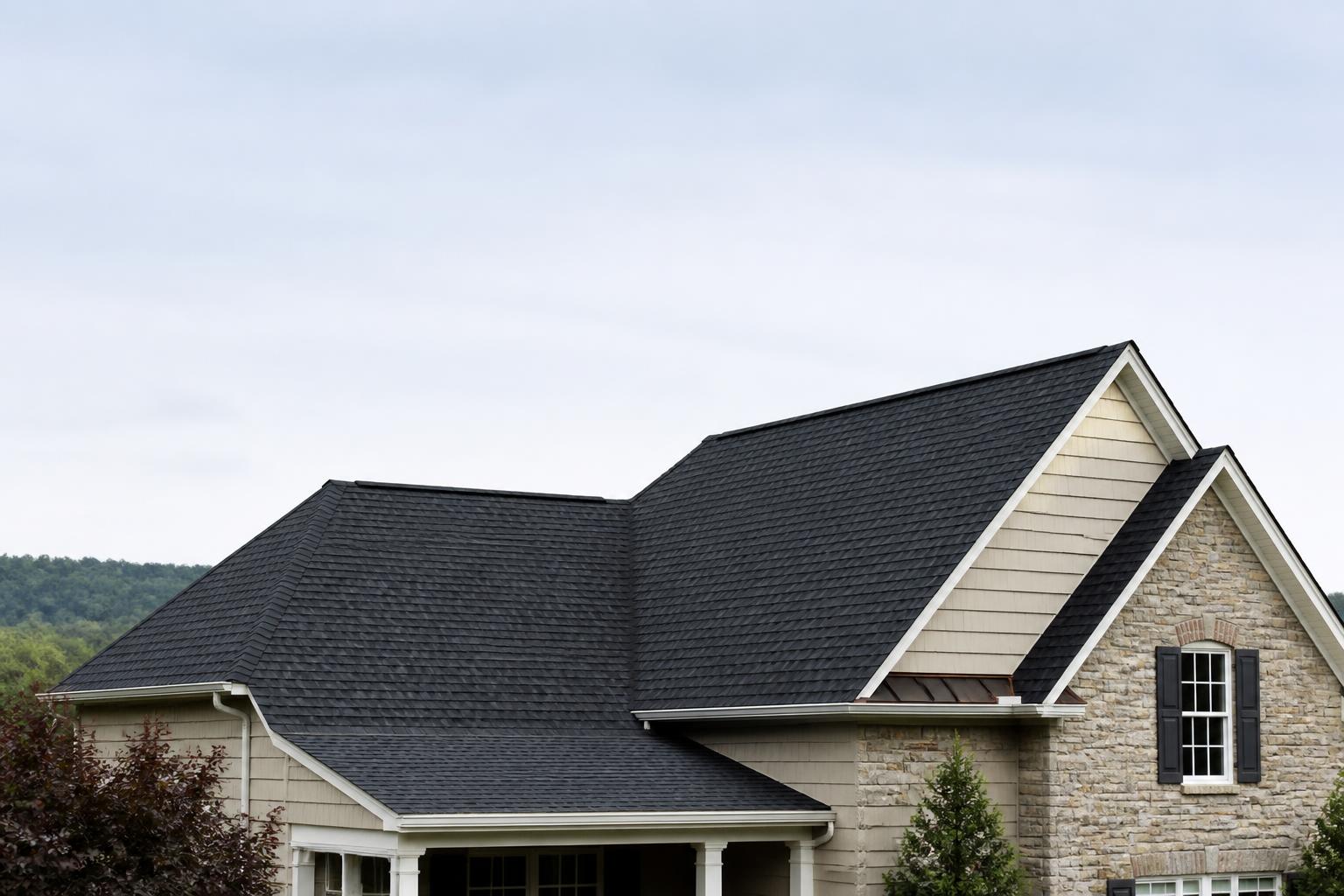
We work on shingle roofing, metal roofing, and flat roofing, so the repair approach matches the material already on the building. That matters because storm damage does not look the same on every roof type.
Different roof styles react to storms in different ways. A shingle roof may lose tabs or show bruising. A metal roof may show dents, seam movement, or loosened fasteners. A flat roof may collect standing water or show punctures and membrane damage after wind-driven debris.
Wind can lift shingles and break their seal, while hail can shorten the life of a section even if the surface damage seems minor at first.
We look for impact marks, shifted seams, and areas where panels no longer sit as they should after heavy weather.
Flat systems often need a close look for tears, openings, and low spots where storm water may have lingered longer than it should.
Zurn Ply Roofing uses the roof material itself as the starting point for repair decisions, which helps match the fix to the damage already present.
The period right after a storm is when small problems are easiest to deal with. Even if the roof seems mostly fine, a quick assessment can reveal damage that will become more expensive to ignore later. Water intrusion can spread beyond the roof surface and affect insulation, drywall, or other building materials.
Here is a practical order for homeowners after a storm passes:
That sequence helps you react early without guessing at the full extent of the issue.
Storm damage does not always stay outside. Once a roof has been opened up by wind, hail, or impact, water can travel along hidden pathways before it shows itself indoors. Homeowners often notice the interior symptoms first.
These symptoms do not always mean the same level of damage on the roof, which is why a direct inspection matters. A small roof repair may solve a large indoor problem when the leak source is caught early enough.
Storm damage repair matters any time a roof has taken a hit, but it is especially important for Boulder, CO properties that need a reliable barrier through changing weather. Even when the damage seems limited to one section, water can travel across the roof structure and show up far from the original opening.
For homes, businesses, warehouses, and factory buildings, the right repair protects the building envelope and helps avoid repeated leaks. Zurn Ply Roofing serves residential, commercial, and industrial customers throughout the region, so we understand how different roof types and building sizes change the repair process.
If you need a roof inspection after hail or wind, we can review the visible damage, explain the repair path, and provide a free quote through phone, email, or website contact.
If you see missing shingles, leaks, interior stains, or lifted edges, the damage should be checked sooner rather than later. Even small openings can spread with the next rainfall.
Yes. A roof can look mostly normal from the ground while the underlayers, seams, or flashing have been weakened enough to let water through.
No. Some roofs only need section repairs or targeted fixes. A full replacement is only considered when the damage is too broad or the roof condition calls for it.
Yes. Older roofs often need a careful inspection because age and storm impact can combine to create more than one problem at once.
That usually means the entry point is small or hard to find. A targeted inspection can identify where the roof is letting water through.
We serve Boulder, CO and nearby communities including Louisville, Lafayette, Longmont, Superior, Erie, Broomfield, Westminster, and Arvada.
If a storm has damaged your roof, the next step is a clear inspection and a repair plan that matches the problem. Zurn Ply Roofing handles storm damage repair for Boulder, CO properties with attention to the roof material, the location of the damage, and the signs that point to hidden water entry.
Call +13037483487 or email contact@zurnco.com to request a quote and get your roof checked before a small issue turns into a larger one.
Start Here
Tell us what kind of roof you have, what issue you are seeing, and where the property is located. We will help you take the next step with repair, replacement, inspection, storm damage work, or tarping.